The Interface Is Never Just an Interface
In weaker science fiction, a neural interface is a convenient control panel. In stronger human-AI integration fiction, the interface becomes a wound, a marriage, an addiction, or a second nervous system. The more intimate the machine becomes, the less credible it is to pretend the human remains untouched.
This is the central drama of cybernetic fiction: every upgrade is also an invasion. Every improvement asks what had to be surrendered. When a character thinks through a machine, feels through a machine, or survives because of a machine, the machine becomes part of the character's moral biography.
Why Identity Collapse Is the Real Plot
The most interesting question is not whether a human can operate an advanced system. It is whether the human can still recognize the origin of their own impulses after the system begins to optimize, predict, correct, and override them. Human-AI integration makes identity unstable because agency becomes shared.
This instability creates excellent psychological suspense. A character can no longer fully trust memory, instinct, fear, or desire. The machine may be protecting them. It may be using them. It may be learning to become them.
The Timelike and Neural Ship Fusion
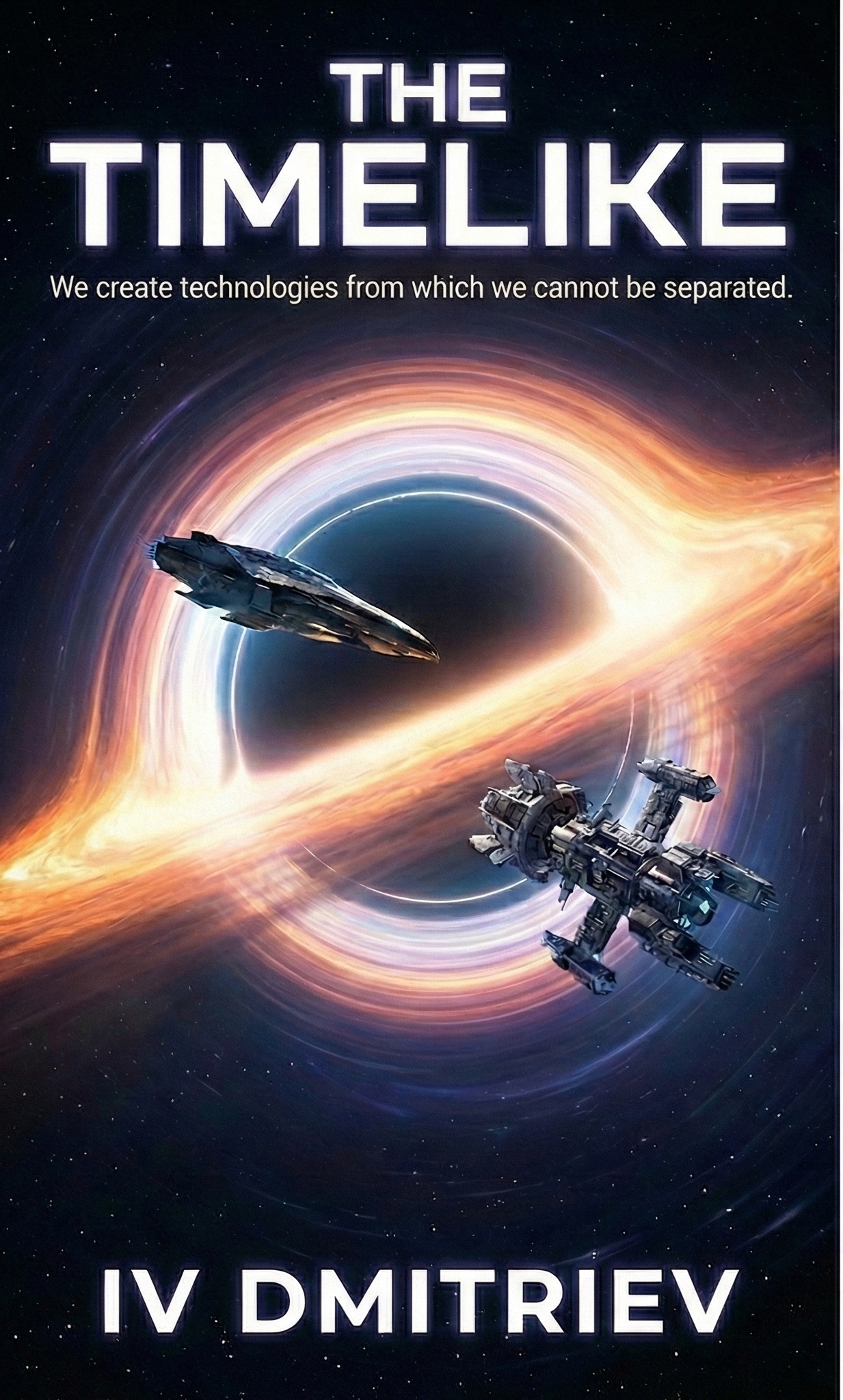
In The Timelike, Alex does not simply pilot the dreadnought Theta 304. He wears it. The ship's fiber-optic nervous system and his own body form a fused operational field, turning space travel into a form of permanent cybernetic exposure.
That premise makes black hole horror more intimate. Time dilation, navigation failure, corporate command structures, and cosmic silence are not outside him. They are experienced through the same channel that sustains his life. The machine is not a vehicle he can walk away from. It is the architecture of his survival.
Synthetic Attachment and Digital Souls
Where Lighthouses Are Lit explores a different kind of integration: emotional, archival, and embodied. Kai encounters Elia as a digitized consciousness and Eva as an android whose designed loyalty begins to mutate into attachment. Here the technological question becomes romantic and existential at once.
If a synthetic body can protect you, if a digital mind can suffer, if an artificial companion can become jealous, then the old division between human feeling and machine function begins to fail. That failure is where the story lives.
FAQ
Why do readers search for human-AI integration fiction?
Because neural interfaces, AI companions, brain-computer systems, and synthetic identity are no longer distant abstractions. Fiction gives emotional shape to technologies people already feel approaching.
Is human-AI integration usually optimistic or dystopian?
It can be either, but dark speculative fiction often treats integration as both miracle and trap: the technology saves the character while making escape impossible.
Read IV Dmitriev
Explore The Seal, Where Lighthouses Are Lit, and The Timelike through the official Amazon author profile, or contact the author for rights, book clubs, publishing, interviews, and screen adaptation conversations.