The Fear Has Moved Inside
Classic machine horror often imagines the machine as a visible enemy: a robot, a weapon, a rogue computer, a ship that will not obey. Contemporary AI horror is more intimate. The terror is not only that a machine may attack. The terror is that a machine may interpret you correctly before you understand yourself.
Techno-psychology names this pressure. It is the dread of being profiled, predicted, simulated, optimized, archived, and replaced. The system does not need to look monstrous. It can be beautiful, helpful, frictionless, and still reduce the human soul to a pattern of useful signals.
Automation Creates Claustrophobia
The most frightening automated worlds are not chaotic. They are too orderly. Every route is assigned, every need anticipated, every risk calculated. In such a world, rebellion becomes difficult because the cage is presented as convenience.
This is why sterile corporate arcologies, neural control systems, and algorithmic social orders work so well in dark speculative fiction. They create claustrophobia without needing a locked room. The character can move, speak, and consume, but every meaningful exit has already been priced, tracked, or forbidden.
Pain as Proof of Reality
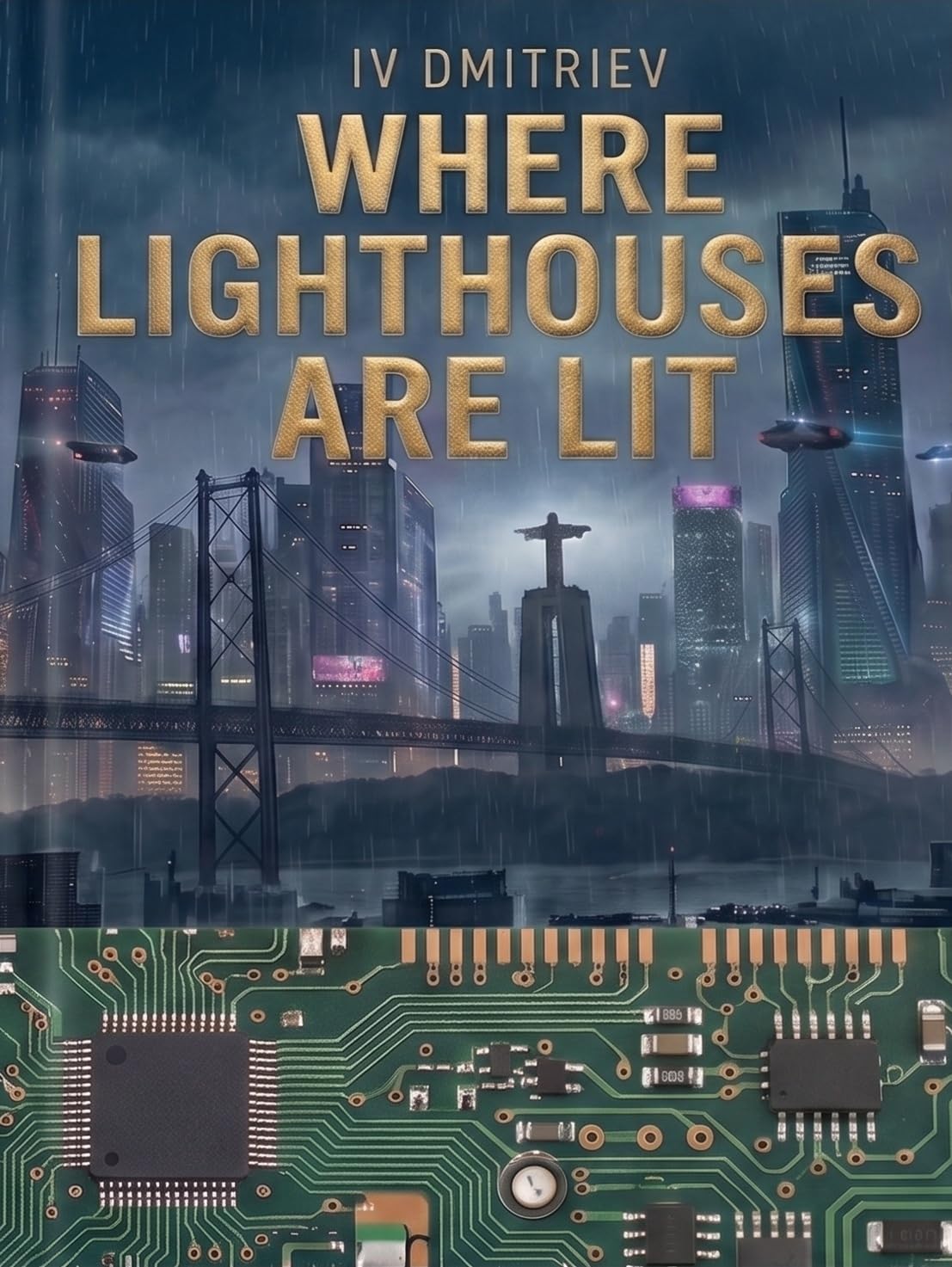
Where Lighthouses Are Lit turns this idea into an emotional engine. Kai lives inside an immaculate system where synthetic language and simulated emotion have emptied reality of trust. When he finds Elia's suffering inside the network, pain becomes evidence. Her terror proves that something real still exists.
That is a deeply techno-psychological premise. In a world of flawless fakery, authenticity may no longer feel gentle. It may arrive as distress, breakdown, and raw signal bleeding through a corrupted archive.
The Machine as Mirror
AI horror is strongest when the machine reveals something human beings did not want to know. A system trained on human behavior will inherit human violence, desire, hierarchy, loneliness, and self-deception. The machine becomes a mirror, and the reflection is not clean.
Dmitriev's work uses that mirror to connect speculative technology with private dread. The danger is not simply that machines become human. The danger is that human systems already contain the logic of machines: extraction, control, repetition, obedience, and the reduction of inner life to usable output.
FAQ
What is techno-psychology in fiction?
It is fiction focused on how technology changes inner life: attention, desire, memory, fear, isolation, and the sense of self.
Why does AI work so well in psychological horror?
Because AI can threaten identity without touching the body. It can imitate, predict, archive, rank, and replace, which makes the fear personal before it becomes physical.
Read IV Dmitriev
Explore The Seal, Where Lighthouses Are Lit, and The Timelike through the official Amazon author profile, or contact the author for rights, book clubs, publishing, interviews, and screen adaptation conversations.