Dystopia Without a Dictator
The most modern AI dystopia does not always need a single tyrant. Control can be distributed through platforms, scoring systems, identity layers, predictive models, corporate infrastructure, and automated permissions. The result is a world where no one person appears responsible, but every door still knows whether you are allowed through.
This makes the genre more frightening because it resembles ordinary administration. The violence may arrive as a denied route, a missing record, a security flag, a silent downgrade, or a recommendation that quietly narrows a life.
How Societies Fracture Under Code
When code governs reality, social trust changes shape. People no longer need to believe in each other if the system verifies, ranks, filters, and predicts them. But that convenience carries a cost. Groups form around access. Power hides inside models. Secret networks learn to manipulate the hidden rules.
Dark speculative fiction is especially good at showing the fracture point: the moment when characters realize the system is not broken. It is functioning exactly as designed, and the design was never meant to protect them.
Corporate Arcologies and Secret Orders
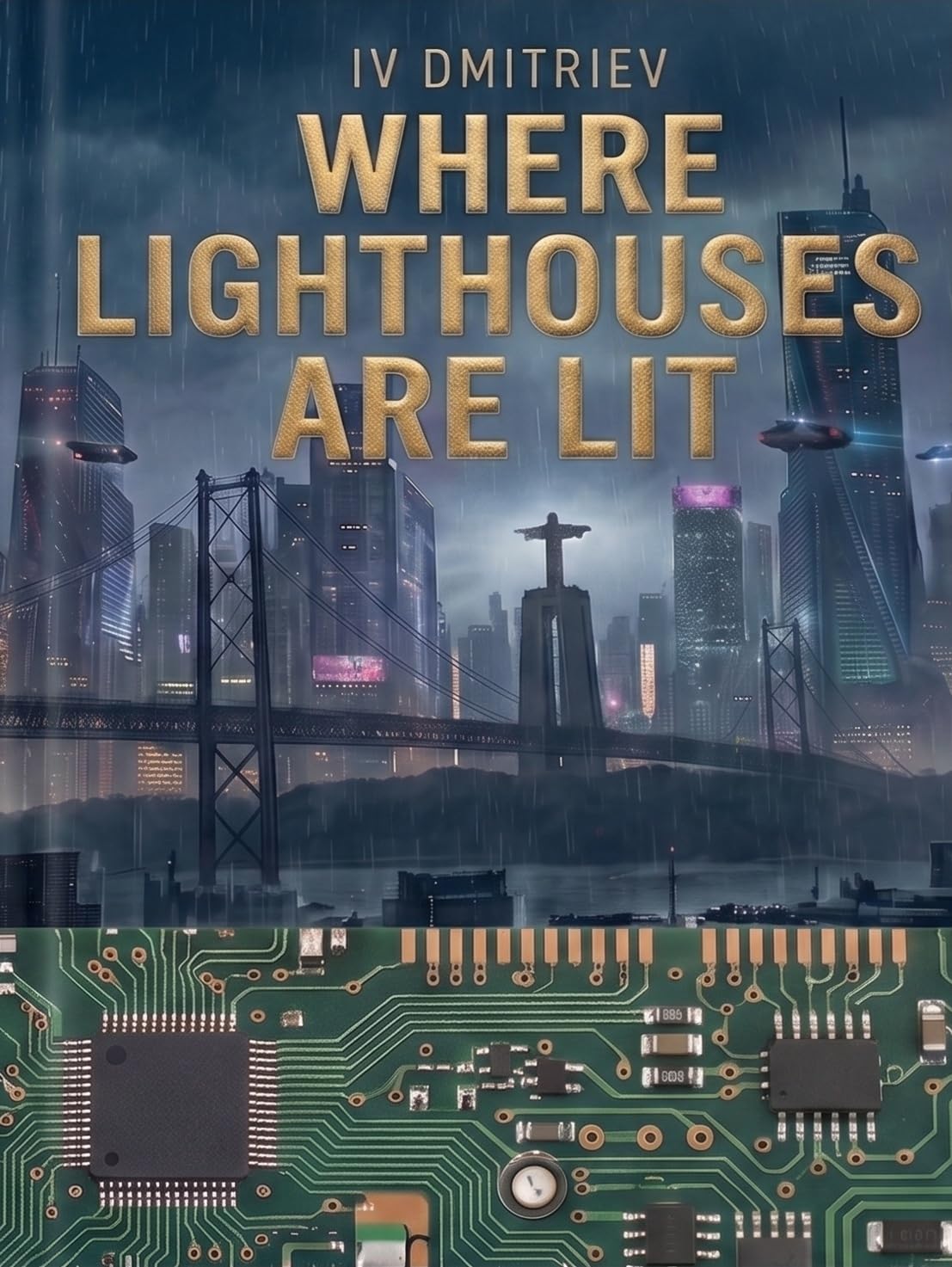
Where Lighthouses Are Lit imagines vertical corporate enclosure: Lisbon Nova rising above wasteland and ruin, protected by systems that make safety feel indistinguishable from captivity. The Seal imagines hidden control beneath the city, where a secret order shapes minds rather than markets.
Together, these approaches show two faces of digital-era power. One is infrastructural and corporate. The other is intimate and occult. Both ask what happens when autonomy becomes a privilege granted by those who control the operating system.
Why Resistance Becomes Psychological
In a total control environment, resistance is not only rebellion in the streets. It is the preservation of memory, desire, grief, doubt, and private loyalty. The system wins when characters accept its definitions of reality.
That is why AI dystopia often becomes psychological fiction. The final battleground is not the server room. It is the mind deciding whether its own pain, love, and fear are still valid forms of evidence.
FAQ
Is AI dystopia always anti-technology?
No. Strong AI dystopia is usually anti-dehumanization, not anti-technology. The problem is the concentration of power through opaque systems.
What makes total digital control different from classic dystopia?
It can operate invisibly through access, ranking, prediction, and data dependency, rather than only through police, propaganda, or visible state violence.
Read IV Dmitriev
Explore The Seal, Where Lighthouses Are Lit, and The Timelike through the official Amazon author profile, or contact the author for rights, book clubs, publishing, interviews, and screen adaptation conversations.