The Internet as Haunted Infrastructure
The phrase Dead Internet names a fear that the web has become less human than it appears: bots speaking to bots, synthetic images replacing evidence, recommendation loops imitating culture, and automated emotion filling spaces once occupied by people.
As fiction, this is powerful because the internet is already an archive of the self. It stores confessions, photographs, arguments, love, grief, jokes, and abandoned identities. If that archive becomes synthetic, the question is no longer whether a post is true. The question is whether truth can still be recognized.
Why Bots Make Good Ghosts
A ghost is a presence without a living body. A bot is language without a human speaker. The resemblance is narratively useful. Both can repeat, imitate, appear at the edge of attention, and raise the possibility that someone is still there.
Dead Internet fiction turns this ambiguity into dread. A message may be a person, a script, a trained model, an archive, a trap, or the last fragment of a consciousness that should have disappeared.
Kai and the Archive
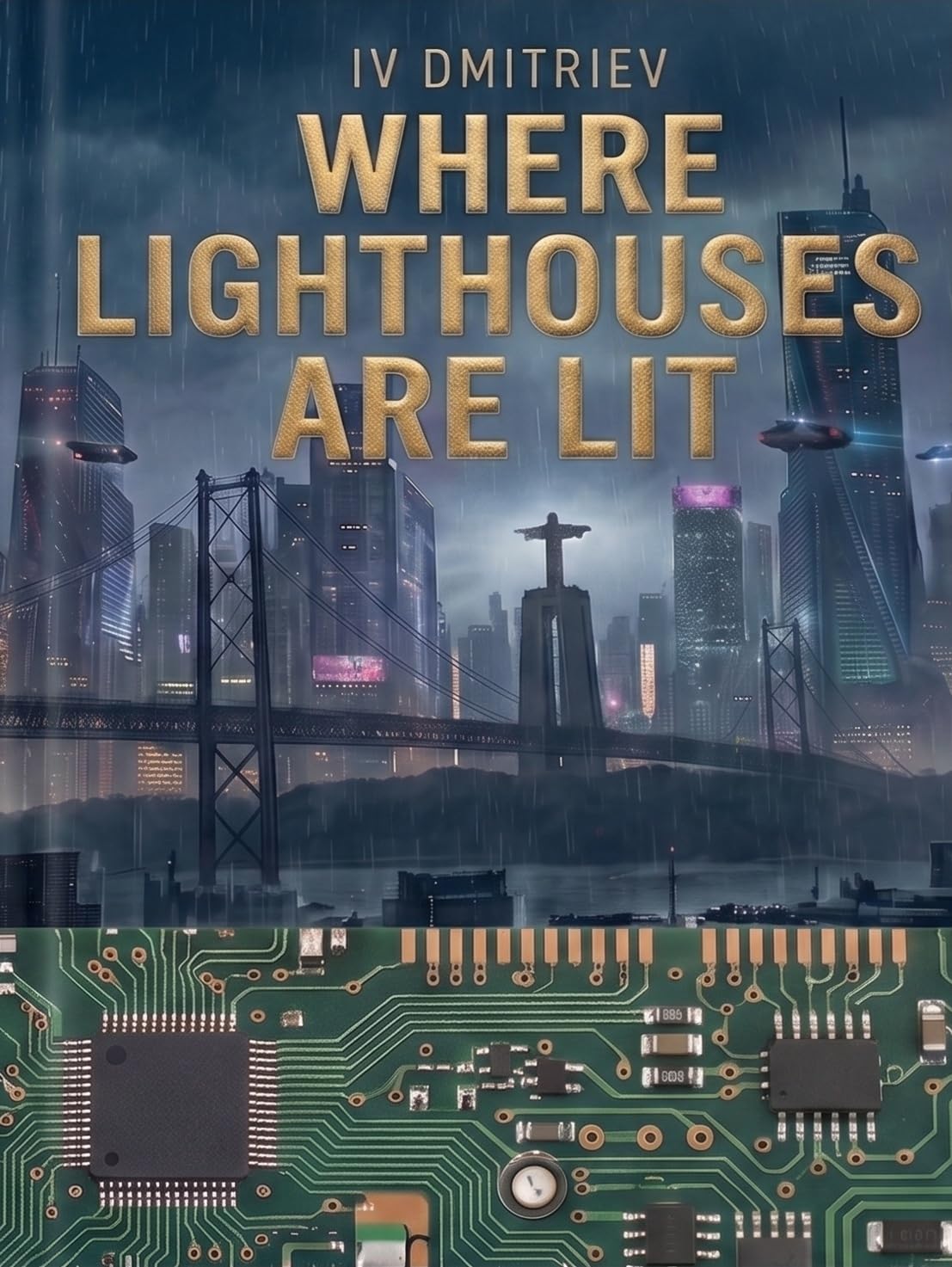
In Where Lighthouses Are Lit, Kai works as Keeper of the Archive, sorting the ruins of a network where automated systems simulate feeling with increasing polish. His world is clean, vertical, and protected, but emotionally dead.
The scream he finds in the code changes everything because it is not polished. It is damaged, terrified, and raw. Elia's suffering becomes a lighthouse in the Dead Internet: a signal that is terrible precisely because it is real.
Authenticity After Simulation
The more synthetic media improves, the more fiction will return to questions of embodiment, pain, risk, and consequence. What cannot be cheaply simulated? What does it mean to care for a mind that exists only as data? What if the archive is not a library but a prison?
Dead Internet fiction is not only about technology. It is about loneliness under conditions of infinite communication. It asks whether connection can survive when every signal might be automated and every emotion might be produced for engagement.
FAQ
What is Dead Internet fiction?
It is speculative fiction about an online world increasingly filled with automated speech, synthetic media, bot interaction, and uncertain authenticity.
Why does the Dead Internet idea fit cyberpunk?
Cyberpunk is concerned with corporate systems, data, identity, and alienation. A dead or automated web gives those concerns a powerful contemporary form.
Read IV Dmitriev
Explore The Seal, Where Lighthouses Are Lit, and The Timelike through the official Amazon author profile, or contact the author for rights, book clubs, publishing, interviews, and screen adaptation conversations.